

There’s nothing more frustrating than falling in love with a sofa, only to get it home and realize it’s too big for your living room—or too small to be functional. Whether you’re furnishing a tiny apartment, a spacious family room, or hunting for cheap lightweight sofas for a rental, getting the size right is make-or-break for your space. Even if you’re eyeing affordable leather couches that fit your budget, ignoring dimensions can turn a great deal into a costly mistake.
The good news? Sizing a sofa doesn’t require advanced math—just a little planning, careful measuring, and knowing how to balance comfort, style, and space. In this guide, I’ll break down everything you need to know to select the perfect sofa size, from accurately measuring your room to matching dimensions to your lifestyle. No more guesswork, no more returns—let’s get it right the first time.
Step 1: Measure Your Space First
Before you scroll through furniture websites or head to the store, grab a tape measure, a piece of paper, and a pencil. Measuring your living room (or whatever space the sofa will go in) is the foundation of choosing the right size. Here’s how to do it properly:
- Overall room dimensions: Measure the length and width of the room, then note any obstacles—doorways, windows, fireplaces, or built-in shelves. Leave at least 18–24 inches of walking space between the sofa and other furniture or walls. This ensures your room doesn’t feel cramped, even with a larger sofa.
- Wall space for the sofa: Decide which wall the sofa will sit against, then measure the total length of that wall. Your sofa should take up 60–70% of this wall space—any less, and it might look tiny and out of place; any more, and it will crowd the room. For example, if your wall is 10 feet long, a sofa between 6–7 feet (72–84 inches) is ideal.
- Ceiling height matters too: If you have low ceilings (under 8 feet), avoid overly tall sofas (over 34 inches). They’ll make the room feel squished. Opt for sleek, low-profile styles—many cheap, lightweight sofas fit this bill, as they’re designed for small spaces.
Step 2: Match Sofa Size to Your Room Type
Your room’s size and layout will dictate the best sofa dimensions. Let’s break down common scenarios and what works best:
Small Spaces
For rooms under 200 square feet, prioritize compact, multi-functional sofas. Loveseats 52–64 inches long or small sofas 68–72 inches long are perfect. Cheap lightweight sofas are a great choice here—they’re easy to move, critical for tight doorways, and won’t weigh down the space. Look for styles with narrow armrests, 2–3 inches, to save width without sacrificing comfort.
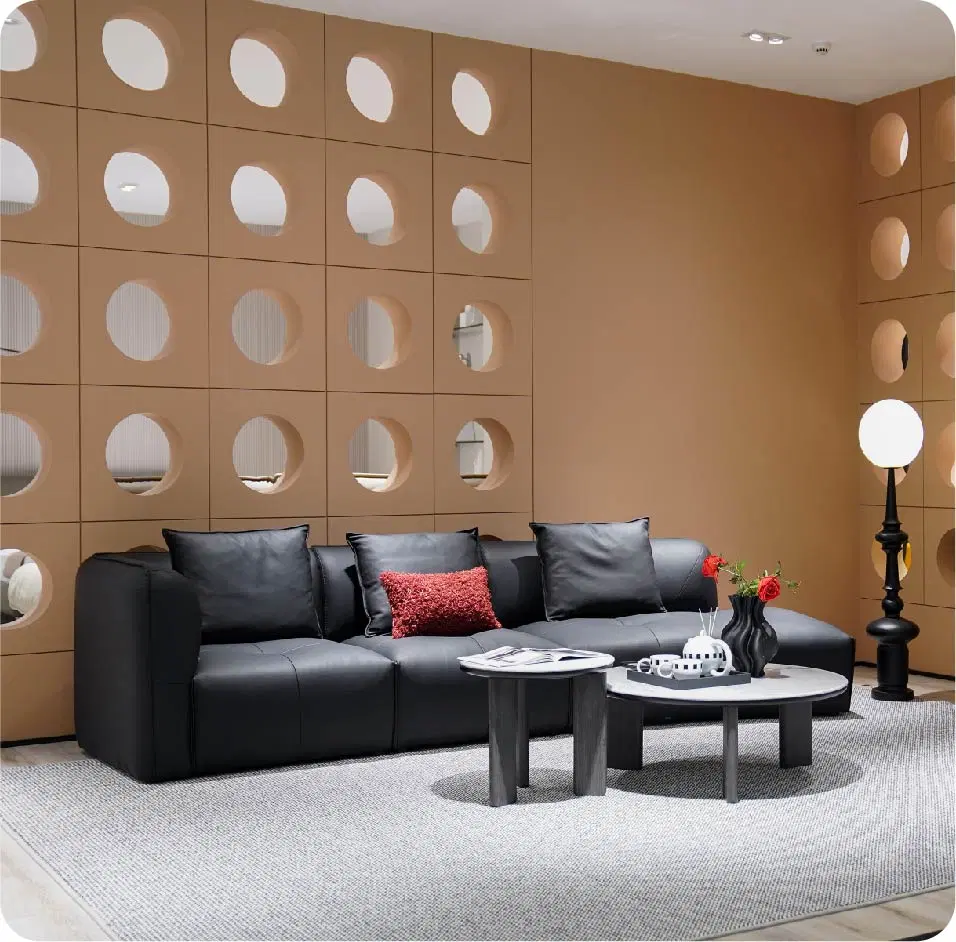
Avoid bulky sectionals or sofas over 7 feet long—they’ll make your space feel like a storage unit, not a living room. If you want the look of leather without the size, many affordable leather couches come in loveseat or small sofa sizes, perfect for adding a touch of sophistication to tiny spaces.
Medium Spaces
Rooms between 200–300 square feet can handle a standard sofa 72–84 inches long. This size seats 3–4 people comfortably, making it great for small families or entertaining a few friends. The depth from front to back should be 30–36 inches—deep enough to lounge, but not so deep that you can’t reach the coffee table.
If you’re on a budget, affordable leather couches in this size range are widely available—look for bonded leather or faux leather options, which are durable and cost less than full-grain leather. Pair with a coffee table that’s 18–24 inches from the sofa’s edge for easy access.
Large Spaces
For rooms over 300 square feet, go bold with a large sofa 84–96 inches long or a sectional. Sectionals work well in open spaces, as they define the seating area without blocking flow. Aim for a total length of 9–12 feet for sectionals, and make sure there’s still 2–3 feet of walking space around them.
Even in large spaces, you don’t have to overspend. Mix and match a large sofa with cheap lightweight sofas as accent pieces—they add extra seating without overwhelming the space. If leather is your vibe, affordable leather couches in extended lengths of 84+ inches are available from budget-friendly brands, often with extra features like reclining seats.
Step 3: Don’t Forget About Depth and Height
Most people focus on length, but depth and height are just as important for comfort and proportion:
- Depth: Sofas range from 28 to 40 inches deep. Shallow sofas 28–32 inches are great for formal living rooms or small spaces—they’re easy to sit upright in. Deep sofas 36–40 inches are perfect for lounging, napping, or family movie nights. Just make sure your room has enough depth to accommodate them—leave at least 3 feet between the sofa and the TV or the opposite wall.
- Height: Sofa height from floor to top of backrest is usually 30–36 inches. Taller sofas, 34–36 inches, add drama and work well with high ceilings. Shorter sofas, 30–32 inches, are sleek and modern, ideal for low ceilings or small rooms. Cheap lightweight sofas often have shorter backrests, which helps keep them light and space-friendly.
Step 4: Consider Your Lifestyle
Your daily habits should influence your sofa size. For example:
- If you have kids or pets, a longer sofa (78–84 inches) gives everyone space to spread out. Affordable leather couches are a smart pick here—leather is easy to wipe clean of spills and pet hair, unlike fabric.
- If you often host guests, a sectional or a large sofa plus a loveseat provides ample seating. Cheap lightweight sofas are great for extra seating because they’re easy to rearrange when needed.
- If you work from home and use the sofa as a reading nook, prioritize depth over length—a deep, cozy sofa (36+ inches) will be more comfortable than a long, shallow one.
Common Sofa Size Mistakes to Avoid
Even with careful measuring, it’s easy to make mistakes. Here are the ones I’ve seen (and made!) most often:
- Buying a sofa that’s too big for the doorway: Measure your doorways, hallways, and stairwells before purchasing. Many cheap lightweight sofas have removable legs, which can help them fit through tight spaces—always ask about this!
- Ignoring the coffee table ratio: Your coffee table should be 2/3 the length of your sofa. A tiny coffee table with a large sofa looks unbalanced, and vice versa.
- Forgetting about traffic flow: Don’t block doorways or walkways with your sofa. Even if it fits against the wall, if it forces people to squeeze past, it’s not the right size.
- Sacrificing comfort for size: A tiny sofa might fit your space, but if it’s uncomfortable, you won’t use it. Look for cheap lightweight sofas with quality cushions (dense foam is better than soft, saggy filling) to get both size and comfort.
Final Tips for Choosing the Right Size
Before you hit “buy” or haul a sofa home, do these quick checks:
1. Use painter’s tape to mark the sofa’s dimensions on your floor. This gives you a visual of how much space it will take up—way more accurate than just imagining it.
2. Test the sofa in the store (or read reviews if shopping online). Sit on it, stretch out, and make sure it’s comfortable for your height and habits.
3. Check the return policy. Even with perfect measurements, sometimes a sofa just doesn’t feel right in your space. Look for brands with free returns or exchange policies.
At the end of the day, the best sofa size is one that fits your space, your lifestyle, and your budget. Whether you’re opting for cheap, lightweight sofas for a rental or splurging a little on affordable leather couches for your forever home, getting the dimensions right ensures you’ll love your sofa for years to come.